
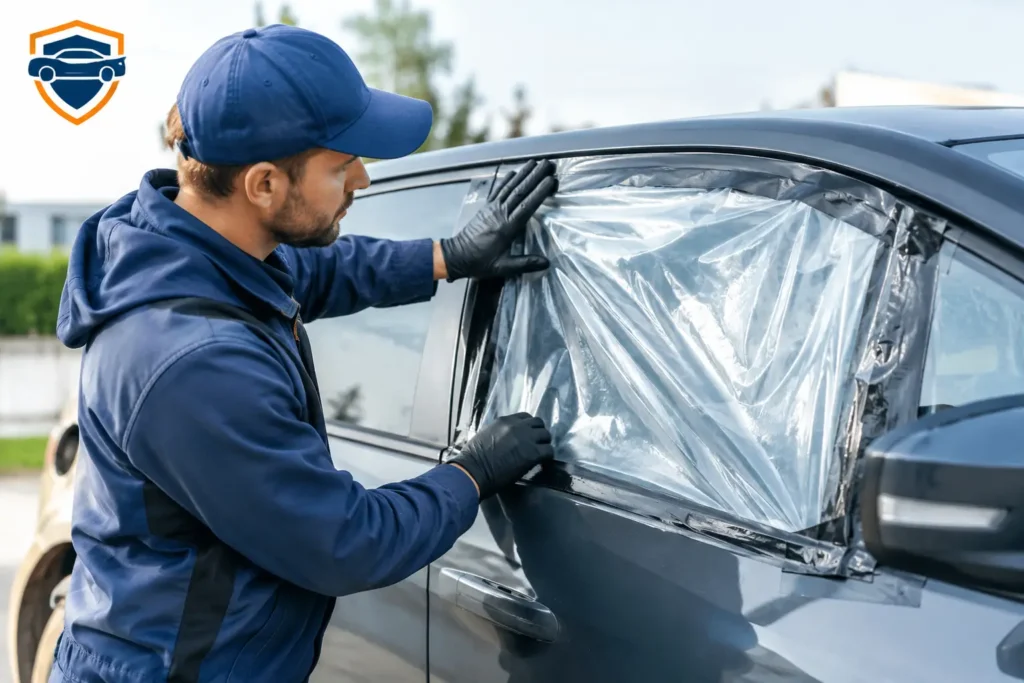
A smashed side window can turn an ordinary drive into an immediate security and safety problem. Loose glass, rain, road debris, and an exposed interior all need attention before you head home or leave the vehicle parked. Knowing how to secure a broken window properly can protect your car temporarily, but it is not a substitute for professional auto glass replacement.
The right temporary fix depends on which piece of glass is damaged. A broken door window or quarter glass can often be covered safely for a short period. A cracked windshield, however, supports the vehicle structure and affects visibility, so it requires a different response. Start by protecting yourself and your passengers, then arrange replacement as soon as possible.
Handle the Immediate Safety Risks First
If the window broke while you were driving, pull over somewhere safe before inspecting the damage. Avoid touching loose shards with bare hands. Side windows are usually made from tempered glass, which breaks into many small pieces rather than long, sharp fragments, but those pieces can still cut skin and become lodged in seats, door panels, and carpeting.
Put on gloves if you have them. Thick work gloves are best, though disposable gloves are better than bare hands. Keep children and pets away from the damaged door, and do not let anyone lean against it. If the glass has fallen into the vehicle, use a brush and dustpan or a vacuum with a narrow attachment to remove visible pieces from the seats, floor mats, and door sill.
Check the window frame carefully. Remove only glass that is already loose and easy to reach. Do not force out pieces that are still held in place around the edges, especially if they are near the window regulator or weather stripping inside the door. Pulling at stuck fragments can damage these components and make the eventual repair more involved.
If a theft or vandalism caused the damage, take clear photos before cleaning everything up. Document the window, the vehicle interior, and any stolen or damaged belongings. This can be useful when speaking with your insurer or filing a police report.
How to Secure a Broken Window Until It Is Replaced
For a broken side window, the goal is to create a weather-resistant cover that stays attached without scratching the paint or blocking the driver’s view. Clear plastic sheeting is the most practical material. A heavy-duty garbage bag can work in an emergency, but transparent plastic is much safer because it preserves visibility.
Begin by drying the painted surface around the window frame. Tape adheres poorly to dust, moisture, and cold surfaces. Open the damaged door if possible, then place the plastic over the outside of the opening. Cut it so it extends at least a few inches beyond the frame on every side.
Use automotive masking tape or painter’s tape to secure the plastic around the frame. Apply tape to the painted metal surrounding the opening, not to rubber trim where it may loosen. Start at the top edge, pull the plastic smooth without stretching it too tightly, and work around the sides and bottom. A second layer of tape may help in wet or windy conditions.
Do not use duct tape directly on your car’s paint unless there is no other option. It can leave adhesive residue or, in some cases, affect older or weakened paint. Avoid covering the window from the inside only. Air pressure, wind, and rain can push the material inward, leaving the interior exposed.
Keep the plastic clear of the side mirror and make sure it does not interfere with door latches, lights, or your ability to see traffic. If the driver’s side window is broken and the cover obstructs your view, do not drive the vehicle except when necessary to reach a safe location or repair facility.
Do Not Slam the Door
A temporary plastic cover is vulnerable to pressure changes. Slamming the door can pull tape loose and tear the sheeting. Close the door gently, and avoid driving at highway speeds if you can. Wind can create noise, loosen the cover, and send small remaining fragments into the vehicle.
If rain is expected, park under cover when possible. A plastic barrier reduces exposure, but it does not provide the seal or security of properly installed auto glass. Check the tape occasionally, especially after driving or overnight weather.
What to Do if the Windshield Is Damaged
A windshield is not safely secured with plastic and tape. Even if the damage appears limited to one area, the windshield contributes to roof support and helps keep occupants protected during a collision. A chip or crack also can spread quickly with temperature changes, road vibration, potholes, or defroster heat.
If the windshield is cracked but still intact, avoid sudden temperature changes. Do not blast hot defrost air onto a cold windshield, pour hot water over it, or use harsh cleaning pressure near the damaged area. A small windshield chip may be repairable when addressed promptly, but a long crack, damage at the edge, or glass that obstructs the driver’s view often calls for replacement.
If the windshield is shattered, heavily fractured, or no longer provides clear visibility, do not drive the vehicle. Arrange towing or ask a Professional Auto Glass Service about Convenient Mobile Service. Mobile replacement can be especially useful when the vehicle is parked at home, at work, or in a location where driving it would be unsafe.
Protect the Interior and Your Belongings
Once the opening is covered, remove valuables from the vehicle. Even a neatly taped plastic cover signals that the car may be vulnerable, so avoid leaving bags, electronics, documents, garage-door remotes, or spare keys inside. If the break-in involved stolen identification or keys, consider whether your home or workplace security could be affected as well.
Dry any wet upholstery promptly. Blot water with clean towels rather than rubbing it into the fabric. If rain entered the vehicle, lift removable floor mats and allow them to dry separately. Moisture trapped under carpeting can lead to odors, mildew, and electrical concerns over time.
Before replacement, do not attempt to operate the damaged window switch repeatedly. The window regulator may still be moving inside the door, and repeated operation can catch debris or strain the mechanism. Leave the switch alone and tell the technician whether the window was fully up, partly open, or moving when it broke.
When to Call an Auto Glass Professional
Temporary covers are for short-term protection, not a lasting repair. Schedule service promptly if the side window, rear window, quarter glass, or windshield is broken. Proper replacement involves clearing hidden glass from the door and interior, inspecting the frame and seals, and installing glass that fits your specific vehicle.
For drivers in North York, Downsview, Vaughan, Thornhill, and nearby GTA communities, Xtreme Auto Glass can provide Trusted Windshield Replacement and side-window service at its North York shop or through mobile service when appropriate. A technician can assess whether the damage is limited to the glass or whether trim, seals, or door components also need attention.
If you plan to use auto insurance, ask about Insurance Claims Assistance before authorizing work. Coverage, deductibles, and claim requirements vary by policy and the cause of the damage. Eligible customers may also qualify for up to 100% Deductible Assistance, subject to applicable terms. Getting the details early helps prevent surprises and keeps the repair process moving.
A Temporary Cover Is Not a Permanent Fix
Plastic can keep out some rain and reduce wind exposure, but it cannot restore the original seal, security, or visibility of automotive glass. It also does not prevent a determined person from entering the vehicle. The longer the opening remains covered, the greater the chance of water damage, loose tape, additional theft, or contamination from dust and road debris.
If you must drive before replacement, choose daylight hours, keep speeds moderate, and avoid heavy rain or highways when possible. Listen for loose material, and pull over if the cover begins to detach. Most importantly, do not compromise clear visibility or passenger safety to get one more trip out of a damaged vehicle.
A calm, careful temporary fix gives you time to protect the car. Professional replacement gives you back the secure fit, clear view, and confidence you need for the road ahead.