
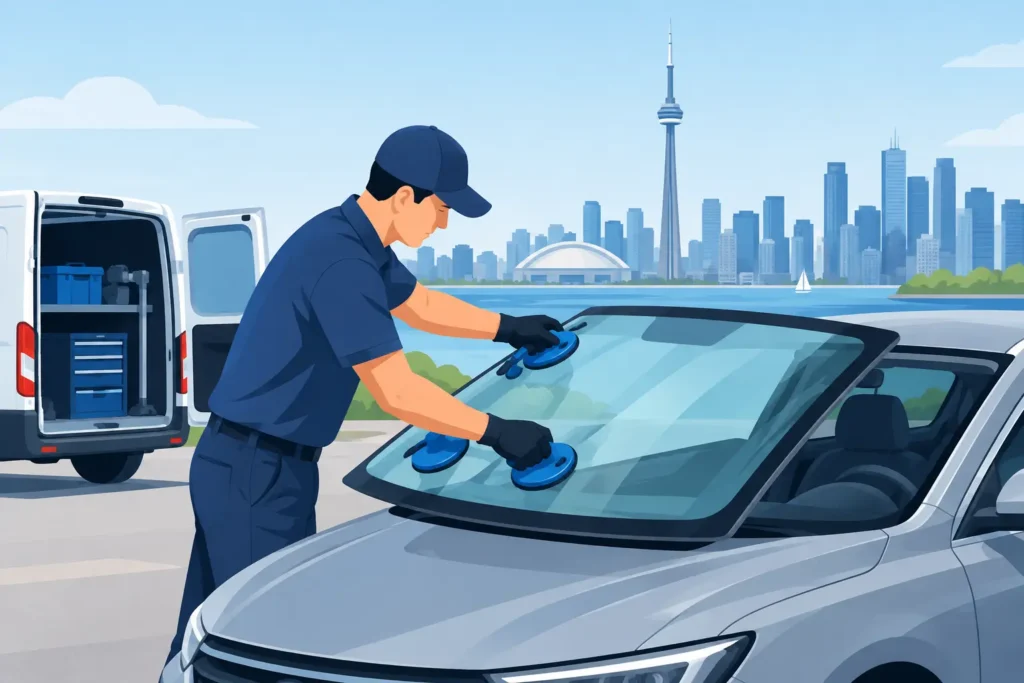
A cracked windshield rarely happens at a convenient time. It may start with a stone chip on the Don Valley Parkway, spread after a cold Scarborough morning, or become impossible to ignore when sunlight catches the damage on your commute. Mobile windshield replacement Toronto drivers rely on brings certified auto-glass work to the place where the vehicle already is, without asking you to drive with compromised visibility or lose a full day at a shop.
A windshield is more than a piece of glass between you and the road. It supports the roof structure, helps the passenger-side airbag deploy correctly on many vehicles, and provides a clear view for the driver and onboard safety cameras. Replacing it properly takes precision and care, especially on newer vehicles equipped with Advanced Driver Assistance Systems, or ADAS.
When Mobile Windshield Replacement Is the Right Call
Not every windshield chip requires replacement. A small, fresh chip outside the driver’s direct line of sight can often be repaired before it spreads. Repair may be the more affordable and practical choice when the damage is limited, the glass is structurally sound, and no camera or sensor area has been affected.
Replacement is usually the safer recommendation when a crack is spreading, damage reaches the edge of the windshield, multiple chips are present, or the break sits in the driver’s field of vision. Edge damage deserves particular attention because it can weaken the windshield’s fit within the vehicle frame. Deep impact damage that penetrates the inner glass layer also calls for an honest professional assessment rather than a quick cosmetic fix.
Mobile service is especially useful when driving the vehicle feels unsafe, your schedule is tight, or the vehicle is parked at home, work, or a roadside location. Commuters, parents, rideshare drivers, and delivery professionals often cannot leave a vehicle in a shop for hours. A qualified mobile technician can bring the same careful process to you, provided the working conditions support a safe installation.
That last point matters. Mobile replacement is not about rushing through a job in any weather or location. The technician needs a stable work area, enough room around the vehicle, and conditions that allow adhesives to cure correctly. Heavy rain, extreme temperatures, or an exposed roadside with active traffic can require rescheduling, moving the vehicle to a protected location, or arranging service at a shop. A safety-first provider will explain the trade-off clearly.
What a Safe Mobile Windshield Replacement in Toronto Involves
A proper replacement starts before the old glass comes out. The technician confirms the vehicle’s year, make, model, trim, windshield features, and sensor setup. Heated glass, rain sensors, heads-up display compatibility, acoustic glass, lane-departure cameras, and aftermarket accessories can all affect the correct windshield selection and installation plan.
The damaged windshield is then removed carefully to protect the vehicle body, dashboard, moldings, and paint. The mounting surface must be cleaned and prepared correctly before new automotive-grade urethane is applied. This adhesive is a critical safety component. It secures the windshield to the frame and needs the proper bead, preparation, and cure time to perform as intended.
Once the new glass is set, the technician inspects the fit, seals, moldings, and visible alignment. Quality work is not simply a windshield that looks clear from the driver’s seat. It means the glass sits correctly, the bonded surface is properly prepared, and the vehicle is given the required safe drive-away time before it returns to regular use.
Toronto weather can make this process more demanding. Cold temperatures, moisture, and changing conditions affect adhesive curing and handling. Experienced technicians account for those conditions with the appropriate materials and procedures rather than treating every replacement as identical. That is one reason certified workmanship is worth more than the lowest quote.
ADAS Calibration Cannot Be an Afterthought
Many late-model vehicles use a forward-facing camera mounted near the rearview mirror. It may support functions such as forward-collision alerts, automatic emergency braking, lane-keeping assistance, adaptive cruise control, traffic-sign recognition, or high-beam assist. Removing and reinstalling the windshield can change the camera’s position enough that calibration is needed.
ADAS calibration verifies that the camera and related sensors recognize the road accurately after the glass replacement. Depending on the vehicle, this may involve static calibration with targets and diagnostic equipment, dynamic calibration performed under specific driving conditions, or both. The exact requirement depends on the manufacturer’s procedures and the vehicle’s equipment.
Skipping a required calibration can leave warning lights on, disable driver-assistance features, or create uncertainty about whether those systems are reading the road correctly. It is not a feature to guess about. Before booking, ask whether your vehicle requires ADAS calibration, whether it can be completed at your location, and how the work will be documented.
A professional recommendation may sometimes be to complete the installation mobile and perform calibration in a controlled shop environment. That is not an inconvenience for its own sake. It is the right choice when the vehicle manufacturer, equipment requirements, or site conditions call for greater control. Xtreme Auto Glass treats sensor alignment as part of restoring a vehicle to road-ready condition, not as an optional add-on.
Choosing the Right Glass and Workmanship
Drivers often ask whether they need OEM glass. The answer depends on the vehicle, insurance policy, availability, and equipment on the windshield. OEM glass is made to the vehicle manufacturer’s specifications. High-quality aftermarket glass may also be appropriate when it meets relevant safety standards and matches the required features.
The key is not a vague promise of “any glass that fits.” The replacement must be compatible with the vehicle’s cameras, sensors, mounting points, tint band, heating elements, and acoustic requirements where applicable. A transparent provider should explain the available options, identify any differences in price or availability, and recommend the choice that supports safety and proper function.
Workmanship matters just as much as the glass itself. Look for certified and insured technicians, a clear warranty, and a provider willing to answer direct questions about adhesive cure time, calibration, and the parts being installed. If a quote seems dramatically lower than every other estimate, ask what it excludes. Moldings, clips, calibration, disposal, taxes, and mobile service can all affect the final price.
Using Insurance for Windshield Replacement
Many Ontario auto insurance policies include comprehensive coverage that may help pay for windshield repair or replacement. Coverage, deductibles, claim limits, and policy terms vary, so the best first step is to confirm your details with your insurer or a knowledgeable auto-glass provider.
For some drivers, a repair can be covered with little or no out-of-pocket cost. For others, the comprehensive deductible may be close to or higher than the replacement cost, making direct payment more sensible. There is no one-size-fits-all answer, and a no-pressure assessment should help you compare the options before authorizing work.
Have your policy information, vehicle details, and photos of the damage ready when you call. A service provider that works with most major Ontario insurers can help explain the claims process, confirm what information is needed, and reduce the back-and-forth. The goal should be clarity, not pressure to file a claim that does not make financial sense for you.
How to Prepare for a Mobile Appointment
Before the technician arrives, remove personal items from the dashboard and front seats, make the vehicle accessible, and share any details about parking restrictions or gate access. If possible, choose a level area with room to open doors and work safely around the vehicle. A garage, covered parking space, or sheltered driveway can be helpful during poor weather.
Tell the technician about any camera warnings, rain-sensing wipers, aftermarket dash cameras, remote-start antennas, or damage around the windshield frame. These details help prevent surprises and allow the right glass, tools, and calibration plan to be prepared in advance.
After replacement, follow the technician’s instructions about drive-away time, car washes, tape removal, and slamming doors. You may notice a mild adhesive smell for a short time, but water leaks, wind noise, loose trim, or new warning messages should be reported promptly. Warranty-backed service means you should know exactly who to contact if something needs attention.
Your vehicle should not have to stay off the road longer than necessary, but it also should not return to the road before the work is complete. When visibility, structural safety, and driver-assistance features are restored with precision, a mobile appointment becomes more than a convenience. It is a practical way to get your clarity back and drive with confidence.