
A windshield can look clean from the driver’s seat and still have fine scratches that catch the sun at exactly the wrong moment. Preventing windshield scratch damage is less about one expensive product and more about stopping grit, worn wipers, and improper cleaning methods from dragging across the glass day after day.
For commuters, families, and drivers who rely on their vehicles for work, clear glass is a safety issue. Light scratches can create glare during nighttime driving, make rain harder to see through, and gradually reduce the visibility you depend on. The good news is that most surface damage is preventable with a few consistent habits.
Why Windshields Scratch More Easily Than Drivers Expect
Windshield glass is durable, but it is not immune to abrasion. Road dust, sand, salt, metal particles from traffic, and even tiny stones can settle on the surface. When a dry wiper blade moves that debris across the glass, it acts like fine sandpaper.
Winter makes the risk worse. Slush and road salt can dry into a gritty film, while frozen wipers may become stiff or tear at the edge. In Scarborough and across the GTA, a vehicle parked outdoors can collect debris overnight and then face a dirty, frozen windshield during the morning rush.
Not every mark is a true scratch. Some are mineral deposits, tree sap, or residue left behind by poor-quality cleaners. Those may be removable with proper cleaning. A scratch that can be felt with a fingernail, however, is more likely to be permanent and may need a professional assessment.
Preventing Windshield Scratch Damage Starts With Your Wipers
Replace worn blades before they fail
Wiper blades are often the main cause of windshield scratches because drivers tend to replace them only after they streak badly. By that point, the rubber edge may be split, hardened, or missing sections. The exposed frame or trapped debris can score the windshield quickly.
Inspect blades every few weeks, especially after a harsh winter or long stretch of hot weather. Look for cracking, uneven edges, loose rubber, or a blade that skips and chatters across the glass. If the wipers leave lines after the windshield has been cleaned, wash the blades first. If the problem remains, replace them rather than forcing them through another season.
Never run wipers on a dry windshield
Even a windshield that appears dry may be coated in dust or fine grit. Activating the wipers without washer fluid presses that debris into the glass. Use washer fluid before sweeping away dirt, pollen, salt, or light snow.
Keep the washer-fluid reservoir topped up with a formula suited to the temperatures where you drive. Plain water can freeze, does not remove oily road film well, and may leave minerals behind. If the nozzles are blocked, have them cleaned instead of relying on dry wipes to clear your view.
Clear heavy debris by hand first
Wipers are designed for rain and light moisture, not for clearing a windshield covered in wet leaves, packed snow, ice chunks, or mud. Remove larger debris with a soft snow brush or rinse it away before using the wipers.
Use an ice scraper made for automotive glass and apply steady, moderate pressure. Avoid metal tools, old credit cards with rough edges, or improvised objects that can leave deep marks. Let the defroster loosen heavy ice rather than attacking a fully frozen windshield with excessive force.
Wash the Windshield With the Right Materials
A clean windshield reduces scratches only when it is cleaned carefully. A dusty shop towel, rough paper towel, or sponge that has been dropped on the ground can hold grit that damages glass. The same applies to car-wash brushes that have collected dirt from dozens of vehicles.
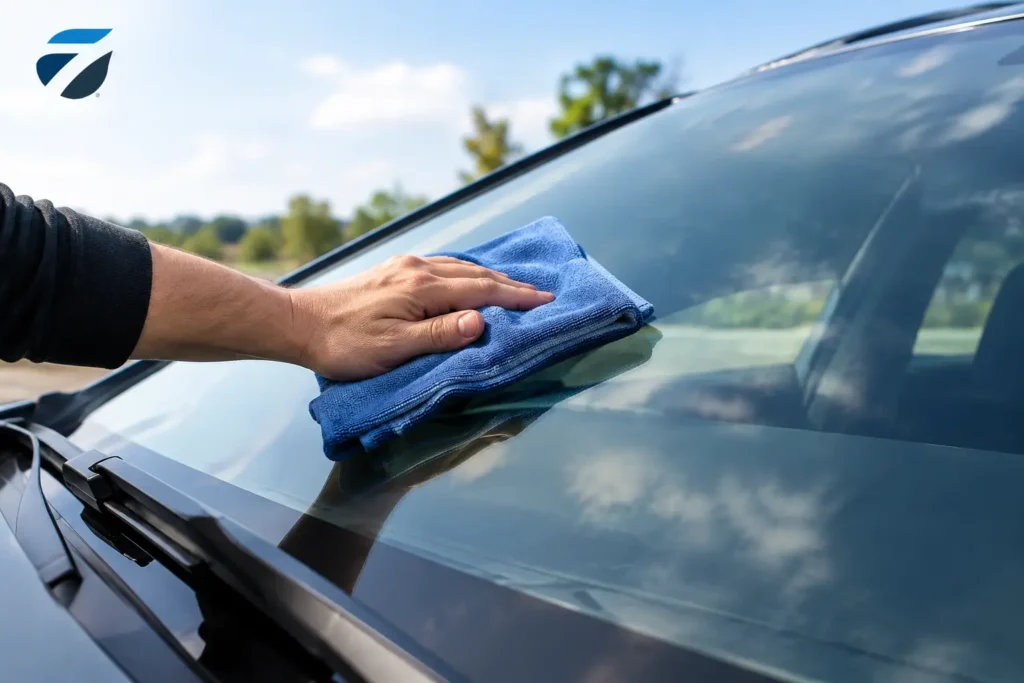
Start by rinsing loose debris from the glass. Then use automotive glass cleaner and a clean microfiber towel. Wipe in straight, overlapping passes and turn the towel to a fresh side as it gets dirty. Finish with a second dry microfiber towel if needed, rather than rubbing one dirty cloth until it smears.
Avoid household scouring pads, powdered cleaners, abrasive polishing compounds, and blades intended for paint removal. Some detailing products are appropriate for glass, but the product and technique must match the problem. Aggressive polishing may improve a very light mark, yet it can also distort the glass or create an uneven area if done incorrectly.
Be careful at automatic car washes
Automatic washes are convenient, particularly during wet winter weather, but the brushes and cloth strips can carry road grit. This does not mean every automatic wash will scratch a windshield. It does mean a poorly maintained wash creates a higher risk than a careful hand wash or a touchless option.
If you use a brush-style wash, inspect the windshield afterward and avoid operating the wipers until the glass has been rinsed clean. A touchless wash is often the safer choice for drivers concerned about fine surface marks, though it may not remove stubborn film as thoroughly without a proper follow-up wipe.
Keep Dirt From Building Up Around the Glass
The area where the windshield meets the hood can trap leaves, sand, and salt. When this material dries, wind or wiper movement can pull it onto the glass. Clean the cowl area regularly, especially after storms and during fall leaf season.
Parking location matters too. Trees can leave sap and organic debris, while construction zones and gravel lots expose the vehicle to abrasive dust. You cannot avoid every source of contamination, but washing the windshield promptly after exposure prevents residue from becoming harder to remove.
A windshield cover can help during snow and freezing rain, provided it is clean before you place it on the vehicle. Do not pull a dirty cover across the glass, and shake it out before storing it. The same principle applies to any towel or cloth that touches the windshield.
Address Chips and Cracks Before They Collect Contamination
A chip or crack does not directly cause a surface scratch, but it creates another weak point in the glass. Dirt, moisture, and road salt can enter the damaged area, making a clean repair more difficult. Temperature changes and vibration can then turn a small chip into a longer crack.
Avoid washing the windshield with high-pressure water directly over a fresh chip. Do not pick at the damaged spot or try to fill it with a store-bought substance unless you are certain it is appropriate. Temporary protection may help keep out debris, but a professional inspection gives you a clear answer on whether the glass can be repaired or should be replaced.
If replacement becomes necessary, the quality of the installation matters as much as the new glass. Proper materials, precise fitment, and careful workmanship help restore the windshield’s structural role and preserve a clear, road-ready view.
Know When a Scratch Needs Professional Attention
Very fine marks may be cosmetic, particularly if they disappear when the glass is wet. Deeper scratches are more concerning when they create glare, sit in the driver’s primary viewing area, or can be felt with a fingernail. A scratch near a chip, crack, or windshield edge deserves attention sooner because the surrounding glass may already be under stress.
Do not assume replacement is the only answer. An honest assessment can identify whether the issue is removable residue, minor surface damage, repairable glass damage, or a safety concern that calls for replacement. Xtreme Auto Glass provides clear recommendations so drivers can make the right decision without pressure.
Your windshield does not need to be visibly shattered to affect how confidently you drive. Cleaning it with clean materials, keeping wipers in good condition, and dealing with damage early can protect your visibility through every season. If glare or scratches are making the road harder to read, schedule an assessment before the next rainstorm or nighttime drive turns a small issue into a bigger one.