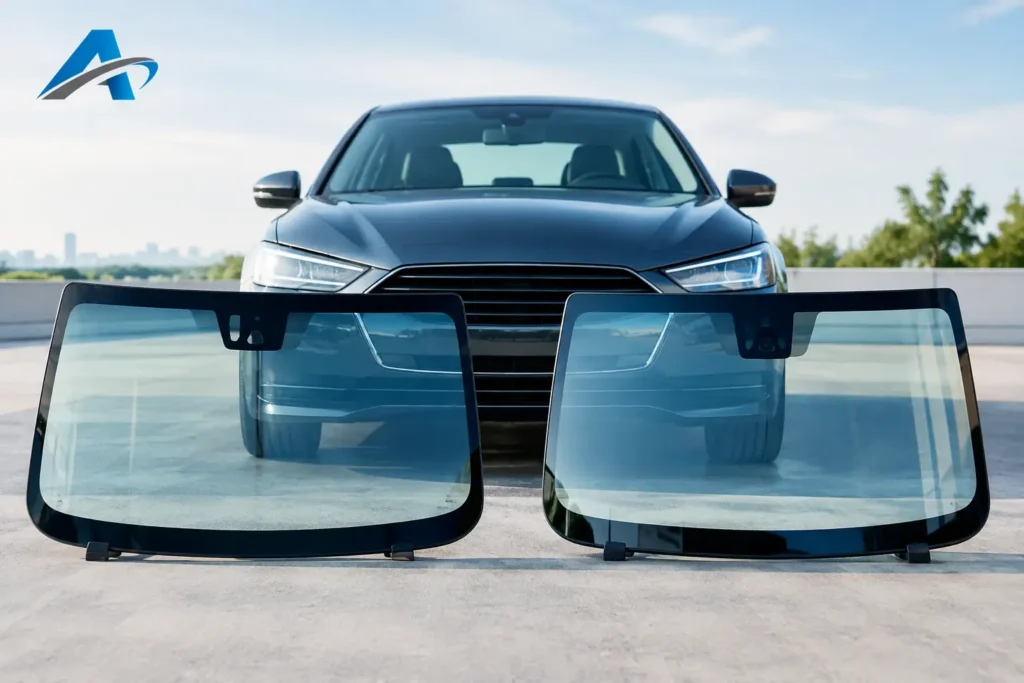
A windshield replacement is not simply a matter of putting new glass in the opening. The OEM vs aftermarket windshield decision can affect fit, optical clarity, weather protection, available features, cost, and your confidence behind the wheel. For a commuter heading across the GTA, a family vehicle, or a work vehicle that cannot sit idle, the right answer depends on the vehicle and the quality of the installation – not just the price on the quote.
A trusted auto-glass technician should explain your options clearly before work begins. The goal is to restore safe visibility and the structural protection your vehicle was designed to provide, with no pressure and no confusing jargon.
What Does OEM Windshield Mean?
OEM stands for Original Equipment Manufacturer. An OEM windshield is made to the vehicle manufacturer’s original specifications, often by the same glass supplier that produced glass for the vehicle when it was built. It may carry the automaker’s branding and is designed to match the original windshield’s shape, tint band, acoustic properties, mounting points, and built-in features.
That does not mean every OEM windshield comes from the same factory line as the glass originally installed on your vehicle. It does mean the glass is produced to the automaker’s specified standards for that make, model, and trim level.
For newer or premium vehicles, an OEM option can be especially worthwhile when the original windshield has specialized details. These may include a particular shade of solar tint, sound-reducing layers, heating elements, heads-up display compatibility, or brackets and mounting areas for equipment located near the glass. Matching those details closely can help preserve the vehicle’s original driving experience.
OEM glass usually costs more. The added cost may come from manufacturer branding, limited supply, and more exact feature matching. For some drivers, that premium is justified. For others, a high-quality aftermarket windshield offers the performance they need at a lower out-of-pocket cost.
What Is an Aftermarket Windshield?
An aftermarket windshield is manufactured by a company other than the vehicle brand. It is made to fit a specific vehicle application and must meet applicable automotive safety standards, but it is not sold as the vehicle maker’s branded replacement part.
The word “aftermarket” should not automatically raise a red flag. Many respected glass manufacturers produce replacement windshields with strong optical quality, reliable durability, and close-to-original fit. In many common vehicles, a quality aftermarket windshield can be a practical, safe, and cost-effective choice.
The key word is quality. Aftermarket glass is not one single product category with one level of performance. Manufacturing tolerances, available features, and fit can vary between suppliers. A lower-priced windshield may be appropriate for an older, straightforward vehicle, but it may not be the best choice when exact feature matching matters.
A professional recommendation should account for more than the vehicle’s year and model. It should consider the trim level, existing windshield features, condition of the frame, insurance coverage, availability, and how quickly you need to get back on the road.
OEM vs Aftermarket Windshield: The Differences That Matter
The most noticeable difference for most drivers is price. OEM glass generally has a higher purchase cost, while aftermarket glass often gives drivers more room to manage a deductible or pay directly for the replacement. If your insurer covers windshield damage, the policy may influence which option is approved or how much you pay.
Fit is another consideration. Both OEM and quality aftermarket glass should fit properly when selected and installed by experienced technicians. Still, OEM glass is designed around the automaker’s exact specifications, which can be valuable on vehicles with complex windshield shapes or numerous integrated features. A technician should inspect the glass application rather than assume that every replacement option is identical.
Optical clarity also deserves attention. A windshield is part of your daily field of vision, particularly during night driving, rain, snow, and low winter sun. Well-made glass should provide a clear, undistorted view. Poor-quality glass can create visual waviness or distortion that becomes distracting on long drives. This is one reason to avoid choosing solely based on the lowest advertised price.
Feature compatibility may be the deciding factor. Windshields can include acoustic layers, heat-control coatings, rain-sensing areas, antenna elements, and specific mounting hardware. If a replacement does not match the vehicle’s original configuration, you may lose a convenience feature or end up with a result that feels less refined than the original.
Finally, there is installation quality. Even the best windshield can perform poorly if it is installed without precision and care. Proper preparation, correct adhesives, clean bonding surfaces, accurate positioning, and sufficient curing time are essential. The installer’s workmanship often matters as much as the logo printed on the glass.
When OEM Glass Is Usually Worth Considering
OEM glass is often a strong choice when your vehicle is newer, higher-end, leased, or equipped with a windshield that has multiple integrated features. It can also make sense if you are particular about matching the original appearance and driving experience as closely as possible.
Drivers may prefer OEM glass when the vehicle’s original windshield has specialty tinting, a heads-up display area, advanced acoustic treatment, or unusual hardware near the top of the glass. In these cases, a precise replacement can help avoid compromises that may be noticeable every day.
It may also be the better route if your insurance policy approves it and the additional cost is reasonable. Before authorizing a replacement, ask what glass option is being quoted, whether it matches your existing features, and whether there will be any out-of-pocket difference.
When Aftermarket Glass Makes Sense
A quality aftermarket windshield is often an excellent choice for vehicles with standard windshield configurations. It can provide safe, clear, dependable performance while keeping the replacement more affordable. This is particularly helpful for drivers paying out of pocket or carrying a higher deductible.
Aftermarket glass can also be a sensible option when availability matters. A cracked windshield can worsen quickly with road vibration, temperature changes, or moisture. If the OEM part is backordered but a reputable aftermarket option is available, replacing the damaged glass promptly may be safer than continuing to drive with compromised visibility or a spreading crack.
For an older vehicle, the cost difference can be especially meaningful. Investing in a quality replacement and a warranty-backed installation may be a better fit for the vehicle’s value than paying a premium for branding alone.
Do Not Overlook the Installation Process
Windshield glass contributes to the vehicle’s overall structure. During a collision, it can help support the roof and provide a surface against which the passenger-side airbag deploys. That is why a rushed or poorly bonded installation is never a bargain.
Before replacement, the technician should inspect the pinch weld and surrounding frame for rust, old adhesive, or damage that could interfere with a secure bond. The correct urethane adhesive must be used, and the windshield must be positioned accurately before it cures. You should also receive clear guidance about safe drive-away time and any care instructions for the first day after installation.
For vehicles with cameras or sensors mounted near the windshield, the work should include a careful check that all related components are correctly reinstalled and functioning as intended. If the replacement requires additional manufacturer-specified procedures, those should be discussed upfront rather than discovered after the glass is in place.
How Insurance Can Affect Your Choice
If you are filing a glass claim, your insurer may cover repair or replacement based on your policy terms, deductible, and the cause of the damage. Coverage varies, so it is worth confirming whether the policy includes OEM parts coverage or allows an equivalent aftermarket replacement.
You do not have to guess your way through the process. A qualified local auto-glass provider can help you understand the replacement estimate, document the damage, and explain what information your insurer may need. The right recommendation should stay transparent whether you are using insurance or paying directly.
Choose the Glass That Fits Your Vehicle and Your Priorities
There is no universal winner in the OEM vs aftermarket windshield debate. OEM glass may offer the closest match for vehicles with specific original features, while quality aftermarket glass can deliver excellent safety and value for many drivers. The best decision comes from matching the correct windshield to the vehicle, then having it installed by technicians who treat every detail as safety-critical.
If you have a crack, chip, or broken windshield in Scarborough or the Greater Toronto Area, do not wait for visibility to get worse. Ask for a clear assessment, compare the options honestly, and choose the replacement that leaves your vehicle road-ready with confidence.